
Content:
- Introduction: Motivation, environmental pollution noise, human hearing, harmfulness limits, guidelines, noise assessment (emission and immission limits), noise types.
- Level calculation: motivation and definition of levels, reference values, level arithmetic, rating levels.
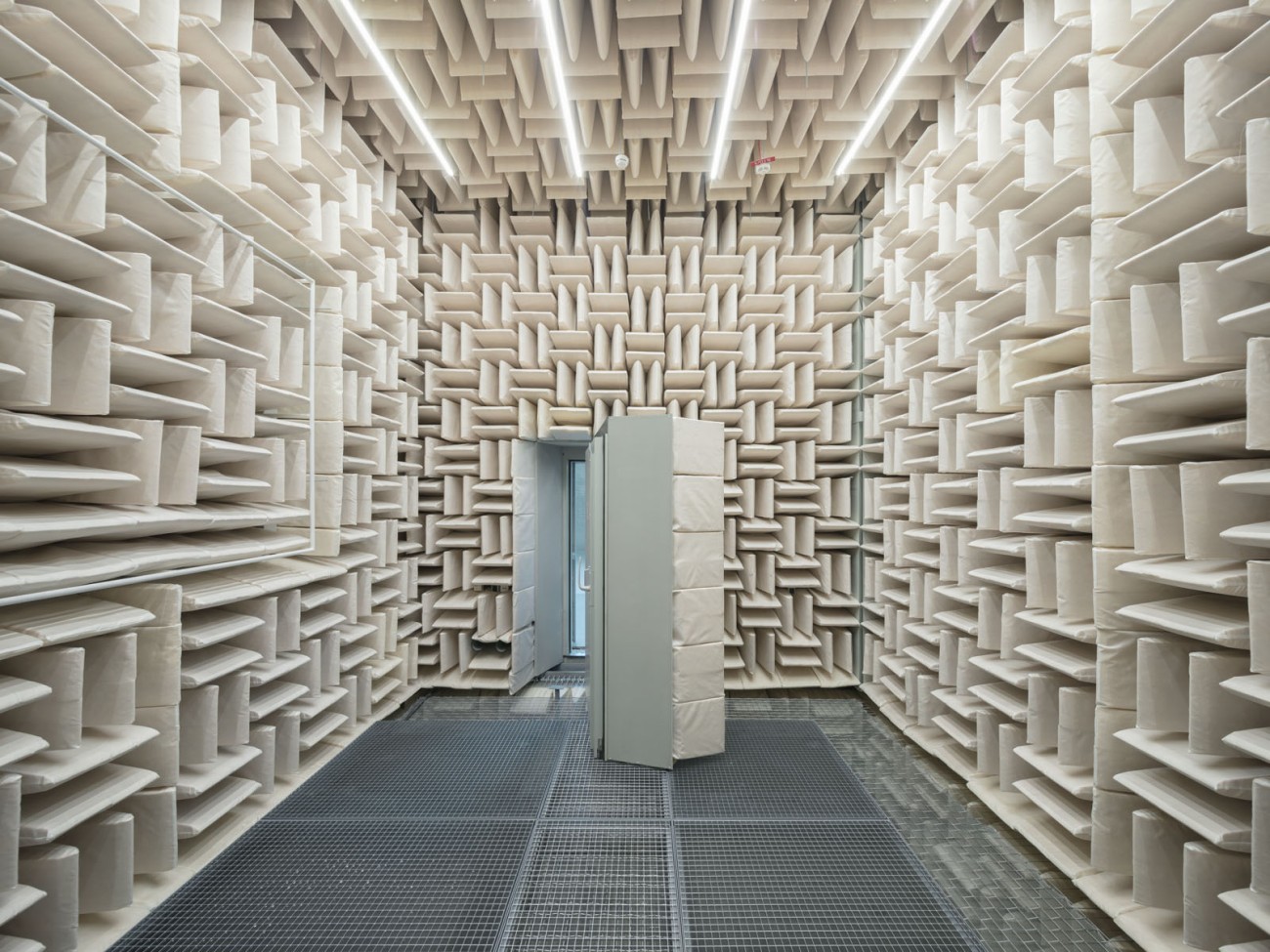
- Introduction to Machine Acoustics: vibrations, single-mass oscillator, impedance and admittance, wave equation of the sound field, solution of the wave equation for 1D-, 2D- and 3D-sound fields, types of radiators and laws of propagation (spherical radiator – line radiator – area radiator), reflection and absorption, interference, diffraction, relationship between displacement, vibration velocity, and acceleration.
- Signal processing: frequency analysis, frequency filter, third octave and octave filters, A-, C- and Z-weighting.
- Machine Acoustic measurement techniques: transducers, methods of sound power determination: free field method, reverberation field method, reference sound source method, sound intensity method.
- Fundamental equation of Machine Acoustics and engineering noise control: noise generation in force-excited and velocity-excited machine structures, direct and indirect sound generation, distinction between primary and secondary noise reduction.
Organization
The lecture times can be found in TUCaN. The course uses the associated Moodle course as a digital learning platform. There you will find all teaching materials and all other information about the procedure, screencasts of the lecture and the exam. Any changes to the dates will also be announced in the Moodle course.
| Date |
Winter Semester, Wednesdays 8:55 AM – 11 AM |
| Location | L1|01 K261 |
| Sign-Up | TuCan |
| Lecturer |
Prof. Dr.-Ing. Tobias Melz Dr.-Ing. Robert Feldmann |
| Exam type | Written Exam, 120 min |
| Credits |
Elective Area Bachelor Credit Points: 6 |


Contact
| Name | Working area(s) | Contact | |
|---|---|---|---|
| Dr.-Ing. Robert Feldmann Deputy Head of Institute | robert.feldmann@sam.tu-... -23512 L1|01 269 |